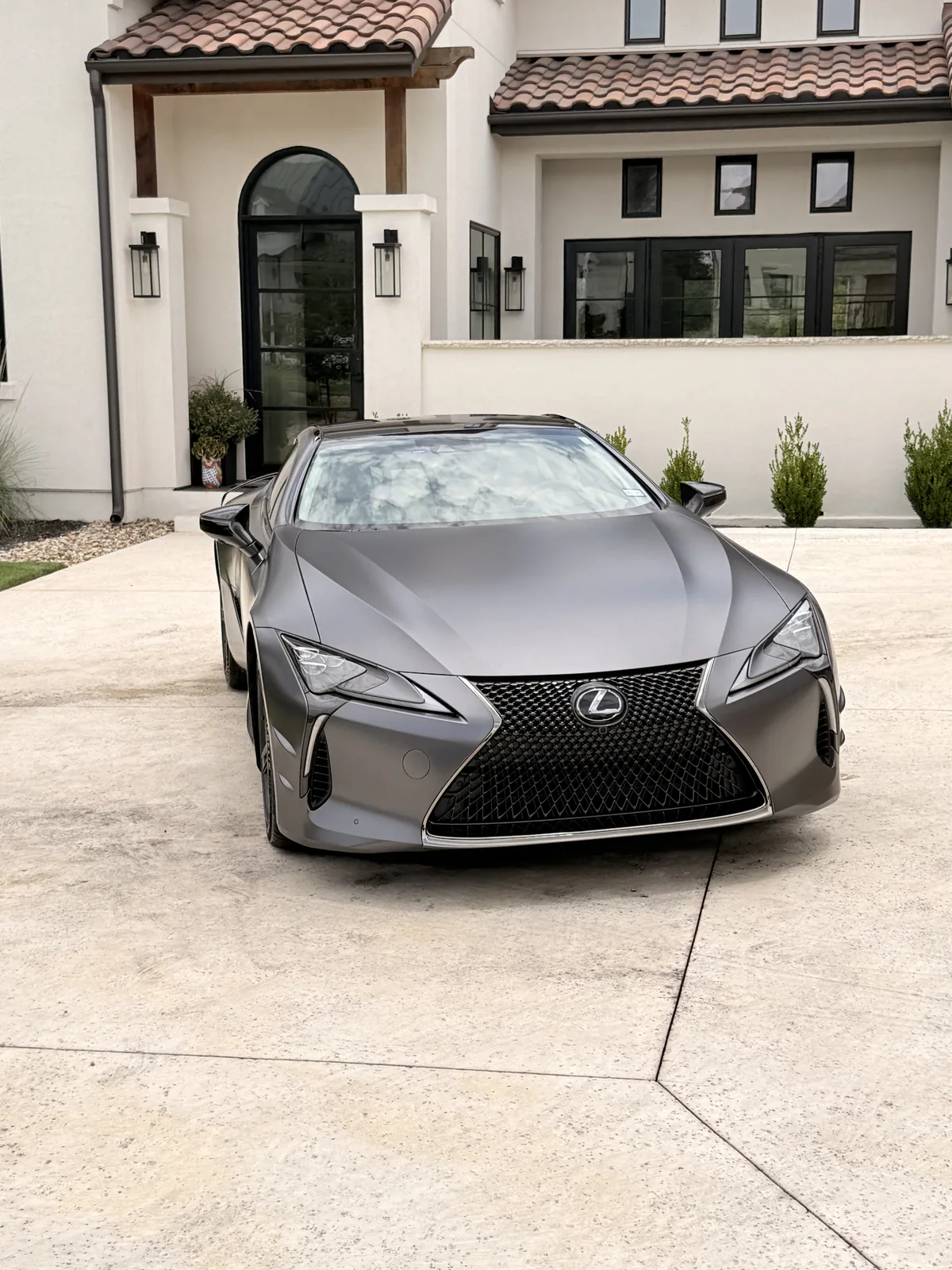
You have probably heard three words used as if they were the same thing: wax, sealant and ceramic coating. They are not. They are three different kinds of protection with different lifespans, different prep and different jobs. Central Texas adds its own set of problems on top: long, hot summers, two heavy pollen seasons, moderately hard water, spring hail and a lot of dusty driving.
Here is a plain comparison of all three, what they actually do on a car parked outside in the Austin area, and how to decide which one fits you. We are a fully mobile detailer, so we also explain how each option maps to the services we do at your home.
The Short Version
Durability depends heavily on the product, the prep and how the car is washed, so treat these as typical industry ranges and not promises:
- Wax is a natural or synthetic layer that sits on top of the paint. It adds warm gloss and water beading, and typically lasts from a few weeks to a few months.
- Sealant is a synthetic polymer layer. It usually lasts longer than wax, often a few months to around half a year, and gives a slick, glassy look.
- Ceramic coating is a liquid, silica-based product that bonds to the clear coat and cures into a hard layer. Professional coatings are rated in years, and they make washing noticeably easier.
If you want the most protection and the least upkeep, a ceramic coating applied over properly prepared paint is the strongest of the three. If you want a quick, low-commitment shine, wax or sealant does the job. The rest of this post is about the middle ground and about why prep matters more than the product.
What Each One Actually Is
Wax. Carnauba and synthetic waxes fill microscopic texture in the paint and leave a protective film. They look great, they are easy to apply, and they wear off quickly in heat and with frequent washing.
Paint sealant. Sealants are made from synthetic polymers that bond to the surface better than wax. They resist heat and detergents longer, so a sealant is a sensible upgrade when you want protection that lasts through a full season.
Ceramic coating. A coating chemically bonds to the clear coat and cures into a thin, hard, hydrophobic layer. It is not a force field. It will not stop scratches, rock chips or hail, and it still gets dirty, but dirt releases from it more easily and the paint is touched less often when you wash it.
Where our own products fit. Our Essential Full Detail finishes with a spray wax sealant for short-term gloss. Luxury Exterior and Luxury Full Detail add iron fallout remover, a clay bar and a 6-month ceramic sealant, which sits between a traditional sealant and a true coating. The 5-Year and 10-Year ceramic coating packages are the multi-year options.
What Central Texas Does to Each One
Heat and sun. NOAA's 1991 to 2020 normals for Austin's Camp Mabry station average about 29 days a year at or above 100 degrees, and July and August highs average in the high 90s. Heat is the biggest enemy of wax, which softens and wears away fastest. Sealants hold up better, and a coating is the most heat-stable of the three. Everything still benefits from shade.
Pollen season. Mountain cedar (Ashe juniper) pollen runs roughly mid-December through February, usually peaking in mid-January, and oak pollen follows from late February into spring. Pollen that gets wet turns into a sticky film. On a coated or sealed car it rinses off more easily. On a waxed car it tends to cling longer, and scrubbing a pollen-caked panel is a common source of fine scratches. Our post on oak pollen and car care covers the rinse-first routine.
Hard water and sprinklers. Austin Water's published reports describe the city supply as moderately hard, and other utilities around the area vary. Sprinkler overspray and rain on a dirty car leave mineral spots on any finish. A coating or sealant helps water bead and run off, but beading water can also dry into spots in the sun, so the best defense is still drying the car after a wash and keeping it out of the sprinklers. Fresh spots usually come off. Spots that have etched into the clear coat may need polishing.
Hail. Central Texas hail season is roughly March through June, and no wax, sealant or coating stops it. If hail is a concern, a garage, carport or a thick hail cover is what protects the car. We will not claim otherwise.
Road dust and grit. Dusty country roads and construction, whether in Cedar Park or out toward Lake Travis, grind into paint and cling to unprotected surfaces. Slick finishes like sealants and coatings shed that dust more easily.
Prep Matters More Than the Product
This is the part most comparison charts skip. A coating bonds to what is under it. If you put any protection over contaminated or swirled paint, you seal that in. Good prep means a safe wash, decontamination with iron remover and clay, and then paint correction where the paint needs it.
That is why every KlenCars ceramic coating package includes paint correction. Both the 5-Year and the 10-Year start with a one-step correction. The 10-Year adds a longer coating term and also coats the wheel faces and exterior glass. If you want to understand what that process is, read paint correction explained or see our paint correction service.
Thinking About Cost Without a Price List
Wax and sealant cost less up front and need to be redone often. A coating costs more up front and is meant to be done once. The right comparison is not the first invoice. It is the cost of the whole stretch you plan to keep the car, including how much time you spend washing it and whether you would otherwise be re-protecting it every season.
Ceramic coating is priced by vehicle size. Starting prices are on the 5-Year and 10-Year pages, or get a quote with your year, make and model, and we confirm the number before you book.
Which One Should You Choose?
- You want a quick shine and do not mind redoing it: a wax or sealant finish. Our full detail options include these.
- You want protection that holds up for a season or two, without a big commitment: the Luxury level, with its iron decontamination, clay bar and 6-month ceramic sealant. See exterior detailing.
- You have a daily driver or newer vehicle and want easier washes for years: the 5-Year ceramic coating, with a one-step correction.
- You plan to keep the car for a decade or want the longest coating term: the 10-Year ceramic coating, with coated wheel faces and exterior glass.
- Your car lives outside and you do not want to maintain it: a coating is the most forgiving, but a garage or cover is still the best protection from sun and hail.
Myths We Hear a Lot
"A coating means I never have to wash the car." No. It makes washing easier and less frequent in practice, but dirt still builds up.
"Ceramic coating makes paint scratch-proof." No. It adds hardness to the surface, not immunity. Scratches, chips and impacts still happen.
"Wax is bad for the paint." No. Wax is fine. It is just short-lived, especially in heat.
"You can put a coating on any paint as is." You can, but you should not. Correct first, then coat.
Caring for Any Protection
Rinse before you touch the paint, wash in the shade with a pH-neutral soap and a clean microfiber mitt, and dry right away so water does not spot. Skip brush-style car washes. With a new coating, follow the cure instructions we give you at hand-off about the first wash. For more, see keeping paint looking new between details and Texas heat and your car's paint.
Frequently Asked Questions
Is ceramic coating better than wax?
For durability and easy washing, usually yes: a coating bonds to the paint and lasts years, where a wax is a short-term layer. Wax still has fans for the look and the low commitment. Better depends on how long you keep the car and how much upkeep you want.
Can I put wax on top of a ceramic coating?
You can, but it is rarely worth it. A coating is slick on its own, and many people prefer to use a spray made for coated cars when they want to refresh the surface. Follow the care instructions you are given at hand-off.
Does a sealant or coating stop hail damage?
No. Nothing you apply to paint stops hail. A garage, a carport or a proper hail cover does. Hail season in Central Texas runs roughly March through June.
Do I still need to wash a coated car?
Yes. A coating makes washing easier but does not make the car self-cleaning. Wash it with a pH-neutral soap and a clean mitt and dry it gently.
Can ceramic coating hide scratches or swirls?
No. That is why paint correction comes first. Every KlenCars ceramic package includes it, so the coating seals in paint that has already been improved.
What is the difference between your 6-month ceramic sealant and a ceramic coating?
The 6-month ceramic sealant that comes with Luxury Exterior and Luxury Full Detail is a shorter-term protection step. The 5-Year and 10-Year ceramic coatings are multi-year products that include paint correction first and are priced by vehicle size.
We Come to You
KlenCars is fully mobile. We bring our own water and power to your home or workplace, with no shop and no drop-off, in Austin, Cedar Park, Georgetown, Lago Vista and Pflugerville. Looking at a coating? See ceramic coating in Cedar Park, Austin, Georgetown, Lago Vista or Pflugerville, or look at our ceramic coating service.
Ready to Protect Your Paint?
Get a Quote with your vehicle details, or Book Now. You can also call Koen at (737) 379-0956, Monday through Saturday, 8 AM to 6 PM CT.